Featured post

There are many things in life that we enjoy and for some people like me, they love knowing and experiencing new things . Well here am also...

Sunday, 12 February 2017

Indian Batik Motifs -2

Hello guys, in this post as i said, I will be discussing about the other Indian motifs.

Sawat Motif
Sawat motif

According to India the motif Sawat is taken from the Vishnu's bird. Whereas, accordint to Javanese, sawat means throw. In ancient times, the Javanese believed in Gods as a force that controls the universe. One of these Gods were Batara Indra who had a weapon which resembles a snake.


Elephant Motif

Elephant Motif

In Indian culture, Elephant is a sign of strenght, Earthiness and responsibility. Elephants are always respected. Elephant is also symbolic to Lord Ganesha. He is the destroyer of evil.


Sida Mukti Motif

Sida Mukti Motif

This motif is mainly made from natural dyes. This motif is used in marriage ceremony. Motif beginning with Sida contains the hope that whatever you want will be received. Sida Mukti means the hope of receiving the happiness and the unseen.

References:

Makna dan Filosofi motif Batik Meru. Available at: http://senirupaterapanbatikindonesia.blogspot.in/2013/12/makna-dan-filosofi-motif-batik-meru.html (Accessed: 21 January 2017).

Indian Batik Motifs-1

Hello everyone, I am hoping that you guys are finding my blog informative and interesting. Today I am going to write about the popular Indian motifs that influenced the world. India has 3 types of motifs namely natural motifs, stylised motifs and geometrical motifs.

Banji Motif

Banji Motif

Banji is created based on the location of swastika. Every end of swastika is connected to other end of swastika and therefore resulting in a pattern. It comes in geometrical motifs. 
Now, the use of this motif is declined but it is nw done only in Banuyas, Indonesia. It can also be used to create tesselations.


Cuwiri motif
Cuwiri Motif
Cuwiri motif was influenced by India to Indonesia when the motif was used in the Mitoni ceremony. Cuwiri means small. The person who wears it is supposed to be respected by all. Cuwiri motif works with Meru and Sawat motif.


Meru Motif
Meru Motif

The word 'Meru' comes from Mahameru mountain. The mountain is considered as a residence of Tri Murti, namely Sang Hyank Brahma, Sang Hyank Vishnu and Sang Hyank Shiva. Tri Murti is said to be a source of prosperity, happiness and life. Therefore, Meru is used as a motif so that whosoevr wears it, gets happiness and prosperity in life.


I will continue with other motifs in my next blog. Please comment if you have any queries or suggestions.

Thursday, 9 February 2017

Indian Batik Process

Indian Batik mainly has 2 techniques for batik.
  • Application of wax via brush
  • Application of wax via Tjanting tool.

Application of wax via brush

  • First, the fabric is washed so that the extra starch is removed.
  • The design in made on the fabric by a pencil, chalk or charcoal.
  • Wax is heated.
  • Wax is applied on the place through a brush where you want the background colour to stay.
  • Fabric is left to be dry.
  • Then the fabric is dyed.
  • The process is repeated if multiple colours are needed.
  • The wax is removed by putting the fabric in boiling water.
  • The fabric is left to dry.
NOTE: Batik colour fades if it is left in sunlight to dye.

Application of Wax By Tjanting Tool

  • The cloth is washed in water for the removal of extra starch.
  • The design in made on the fabric by a pencil, chalk or charcoal.
  • Wax is heated.
  • Wax is applied on fabric with the help of tjanting tool or Kalamkari pen.
  • Fabric is left to be dry.
  • Then the fabric is dyed.
  • The process is repeated if multiple colours are needed.
  • The wax is removed by putting the fabric in boiling water.
  • The fabric is left to dry.

References:

Available at: http://www.craftmark.org/sites/default/files/P033%20Batik.pdf (Accessed: 18 January 2017).

strandofsilk, 2017 (2011) West Bengal - Batik - motifs and Colours. Available at: https://strandofsilk.com/journey-map/west-bengal/batik/motifs-and-colours (Accessed: 18 January 2017)

Virmani, T. (2012) How to get a Batik print ? Easy step by step DIY procedure. Available at: http://www.letsexpresso.com/fashion/how-to-get-a-batik-print-easy-step-by-step-diy-procedure/ (Accessed: 19 January 2017).

Wednesday, 8 February 2017

Indian Batik

As i said before, there are some traces that India has historical traces of batik. Though with time the practice of Batik was reduced because of the entrance of Egyptian machines. The practice of Batik revived in India in the 19th century when it was introduced as a 2 year course in Shanti Niketan (Kolkata and Thereon).

Well the finest Batik paintings made in India are from Chola Mandal which is located in Chennai, Tamil Nadu. Batik is mainly done in Gujrat, Rajasthan, Andra Pradesh, Madhya Pradesh and West Bengal.Batik done in cotton is normally washed with detergent whereas, silk batik is normally dry washed. Batik is same on both sides and in India it is mostly done on cotton and silk and normally synthetic clothes are avoided.

Evolution

In the starting natural dyes (turmeric was used for yellow,berries was used for red colour,etc.) were used  with cotton and silk cloth. Now, batik id done on cotton, silk, Georgette, crepe, voiles, poplin,cambric, etc; and chemical has taken the place of natural dyes.Before the colours mostly used were Indigo (symbolising God Brahma), Dark Brown (symbolising God Vishnu) and White ( symbolising God Shiva). Now, brighter colours are used.
Batik was used precisely for tailored clothes and dresses. Now it is used as wallhangings, dupatta's, paintings, scarves, bedsheet, handbags, shawls, Kurti's, etc.

Indian Batik Tools

Kalamkari pen
Tjanting tool 1
Tjanting tool 2
Praffin Wax
Boiling water
Beeswax
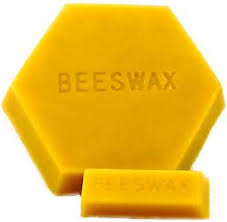
Batik has several kind of material and tools, starting from fabric to water. Fabric used can be cotton or silk or any woven cloth but mainly cotton is used in India. Wax is used containing 70% Praffin Wax and 30% beeswax. More paraffin wax will result in more cracks.


Dyes are used as colours. Brushes , Kalamkari pens.Tjanting tools can be used to apply wax. Boiling water is used to remove the wax.
Dyes


References:

2011 (2010) Batik, Batik fabric, Batik in Indian textiles, printing tradition. Available at: http://www.india-crafts.com/textile/printing_tradition/batik/ (Accessed: 22 January 2017).

2011 (2010) Batik printing. Available at: http://www.india-crafts.com/textile_products/batikprinting.html (Accessed: 23 January 2017).

strandofsilk, 2017 (2011) Gujarat - Batik - A prelude to Indian Batik. Available at: https://strandofsilk.com/journey-map/gujarat/batik/introduction (Accessed: 24 January 2017).

HISTORY OF BATIK FABRIC-INDIANMIRROR (no date) Available at: http://www.indianmirror.com/culture/indian-specialties/Batikfabric.html (Accessed: 25 January 2017).

 Pedia, T.U. (2013) Batik: All about Batik fabric, Batik art and Batik Saree. Available at: http://www.utsavpedia.com/motifs-embroideries/batik-a-worldwide-art/ (Accessed: 25 January 2017).

Batik's Origin

I hope you all are finding my blog intresting and informative. Well today I am going to talk about Batik's origin.

There are a lot of rumours that from where the batik started.
Well, various traces of batik have been found from about 100’s of years ago. Its traces can also be seen in Egypt, where the linen was dipped in wax and was wrapped around the mummies and then the wax was scratched by a stylus. But then the use of batik changed it is used as clothing now.
Whereas, it is also argued that India or Sri Lanka originated batik in 6th or 7th century. Moreover, it is also said that batik was originated in 13th century by Indonesia as its traces can be seen in the statues of Prabhanan, but that statue just had the design of flower in it which could also be caused because of Ikat rather than batik.


Well as I was going through my research I also found that India started with its batik work from about 1st century and it’s traces can also be seen in Ajanta caves, where it is said that Khatri community was the first one to practice it. Due to European machine entry, the practice of batik declined slowly and therefore was rarely practiced because it is labour extensive.


 India also started trading from about 12th century and via trading India traded it’s different crafts including batik. So in some theories it is also said that India traded Indonesia. Indonesia got influenced from the art and therefore started practicing it by replacing and recreating motifs.

Well, still the origin of batik is unknown.

References:

HISTORY OF BATIK FABRIC-INDIANMIRROR  Available at: http://www.indianmirror.com/culture/indian-specialties/Batikfabric.html (Accessed: 17 January 2017).

 2017 (1997) Batik, the traditional fabric of Indonesia. Available at: http://www.expat.or.id/info/batik.html (Accessed: 18 January 2017).

Influences, B. (2000) Short history of Batik. Available at: http://www.1worldsarongs.com/shorhisofbat.html (Accessed: 18 January 2017).


Co, D.T. (2016) Batik. Available at: http://www.dharmatrading.com/techniques/batik/batik-history.html (Accessed: 18 January 2017).

Tuesday, 17 January 2017


Hi everyone,

Glad that you all are here. As I had mentioned in my first post, here on I will talk about the topic I have chosen for research which is Resist Dyeing.
Resist Dyeing is, of course, a dyeing technique. You must be wondering why a dyeing technique should be called “resist”. Actually, manipulation of fabric prior to application of dye is called resist. They partially or completely prevent dye from colouring the fabric. This technique helps in creating patterns and motifs by either using some type of paste (wax, rice paste, mud, etc) or stitching or tying the cloth to create designs. The best resist dyeing techniques now a day are batik and tie-dye.
Resist dyeing has been in use since ancient times. Its traces can be seen in Egypt where the linen fabric was dipped in wax and scratched with a stylus and then was dipped in blood and ashes. Resist dyeing has been popular in Asia since 6th century.It uses canting tool, cooper stamps, brushes, needles, thread, bamboo frames, etc. In the ancient times natural dyes were used like turmeric was used for yellow colour and berries were used for red colour but now synthetic dyes are widely used.

Batik: It is a form of wax resist dyeing. It is used for creating motifs, designs and patterns. In this first we make the planned designs by pencil or chalk on cloth and then we apply wax where we want to resist the dye and then we let it dry and then we dip it in the dye.You can dye multiple times to get the design needed. The only thing to remember is that where you will apply wax the cloth will not get dyed from that place. Till this time we can see a little bit how the pattern is coming out but the final pattern will be seen only after the removal of wax. Wax is removed in hot water. You can see the following image for better understanding.
Batik Process

Batik is said to be originated in 6th or 7th century by India or Sri Lanka. Batik is best done on muslin, cotton and silk cloth which are quite thick. Wax which is used the most are beeswax which is extracted from honey hives and paraffin wax which is synthetic. Most countries use bright colours for batik but places like Japan uses indigo and white colour. 

Tie and Dye: In Tie and Dye patterns are formed by folding, twisting, pleating and crumpling of fabric. Tie and dye mostly uses bright saturated colors with bold patterns like mandala, peace sign or spiral. Nowadays, A variety of dyes is used for colouring the fabric like food colouring, fibre reactive dyes and Vat dyes.


Different countries have introduced different tie and dye techniques. Like Japan has introduced Shibori which in itself has 6 different kinds of tie and dye techniques.
Check my next blog for more detailed information on all this and how they are done.

References:

Resist dyeing (2017) in Wikipedia. Available at: https://en.wikipedia.org/wiki/Resist_dyeing (Accessed: 7 January 2017).


Kent State university (2017) Available at: http://www.kent.edu/museum/resist-world-resist-dye-techniques (Accessed: 07 January 2017).

Tuesday, 10 January 2017

There are many things in life that we enjoy and for some people like me, they love knowing and experiencing new things. Well here am also a simple person who likes knowing new stuff and mostly about things that can be done on fabrics. I study in a fashion college and as I wrote ‘fabric’ above I think you might have guessed that I am doing Fashion Designing. Well you’re not wrong!
I am in first year of college and of course I am learning stitching and even simple pleats, etc. excites me.

Well, we got an assignment in our college in which we have to read different crafts or designs movements and even folk and tribal art. A detailed research though! To help us in this assignment our college took us for several trips like to the Craft and Hand loom Museum, Delhi and Dilli Haat, where we saw a lot of new things like Warli paintings, Rajwar Hut, Patachitra painting, Chamba Rumal, Bandhej work, we even saw flowers made of seashells!

Well in all this I found a topic which has always interested me that was Resist Dyeing, because I had prior knowledge to it and moreover I always love to learn more about it. Batik and Tie-Dye  is quite popular nowadays. Moreover, as a Fashion student it will surely one day help me in pattern and motif making.
I created this blog to help people get a clearer picture of what these techniques are like. For example, how they were invented to how they became popular, I would try and share with you everything I learn during my journey in this module. After all, Knowledge is better shared then kept!

Please check this page for more information and knowledge. Following is the collage made by resist dyeing techniques.